Logo

history

HomeTourist Attractionshistory

Tourist Attractions

  • Seooreung
    Seooreung VIEW
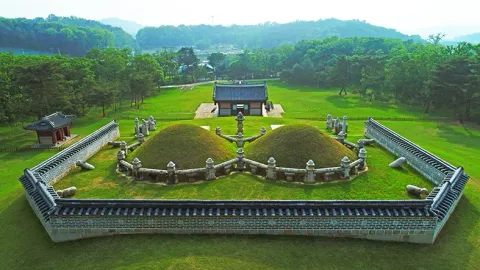
    Seo-o-reung, a collection of five royal tombs, is a site that introduces you to the varieties, formation and forms of royal burials of the Joseon Dynasty Period. The five tombs are enclosed within a beautiful park that combines its historical, aesthetic, and cultural aspect with the tranquil and beautiful natural surroundings, perfect for a stroll. 
  • Seosamneung
    Seosamneung VIEW
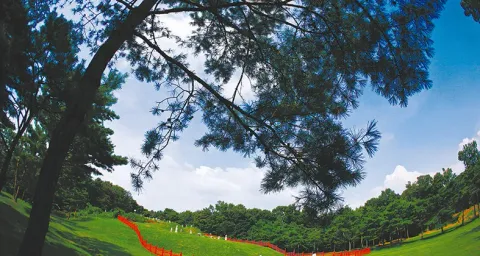
    A family tomb of the Joseon Dynasty, Seosam-reung(Tombs) is perfect for a quick family picnic with a stretch of grass and surrounding pinetrees. The tomb also offers a rare foreign sight of horses grazing at a nearby racing center.  
  • Tomb of King Gongyang, Goyang
    Tomb of King Gongyang, Goyang VIEW
    As a twin grave of the Goryeo Dynasty’s last monarch King Gongyang(1389~1392) and his consort the Sunbi, the royal tomb is best described as modest with simple stoneworks.
  • Tomb of General Choe Yeong
    Tomb of General Choe Yeong VIEW
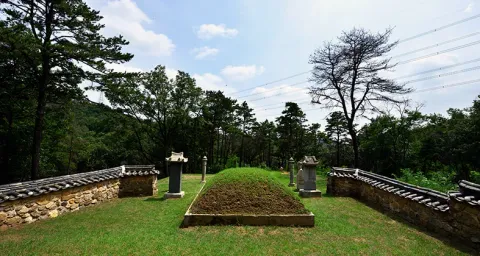
    This tomb is of General Choe Yeong (1316~1388) a renowned general and loyalist during the late Goryeo Dynasty. He defeated Japanese pirates and the Red Turban Rebellion several times in late Goryeo; however, when Yi Seong-gye was ordered to use his armies to conquer the Liaodong peninsula he decided to return to the capital also known as the Wihwado Retreat, triggering a coup d’état. He was falsely accused and beheaded when Joseon Dynasty was founded. Due to his unjust demise, it was said that grass would never grow on his grave. His motto, ‘Regard gold as nothing but mere rocks’ signifies his integrity following his father’s instructions. He devoted his life to the dynasty as a patriotic general. 
  • Tomb of Seongnyeong-daegun
    Tomb of Seongnyeong-daegun VIEW
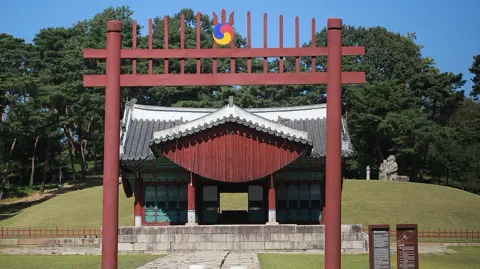
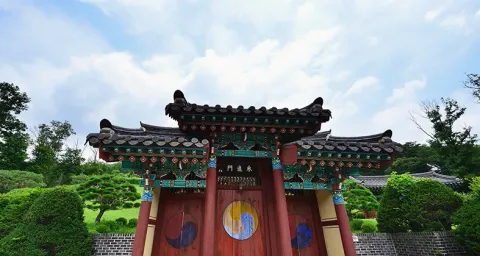
    In Daeja-dong, you can find the tomb of the fourth son of King Taejong and grandson of Yi Seong-gye. The burial mound is comparable to those of the tombs of the kings from the Joseon Dynasty, and at the entrance to the tombs is an ancestral shrine. The tomb is particularly worthy of attention because the site was chosen through the process of pungsu-jiri (Fengshui or geomancy) in order to foster good fortune in the future.
  • Haengjusanseong Fortress
    Haengjusanseong Fortress VIEW
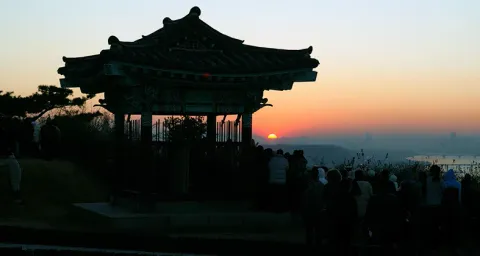
    As a fortress made of soil around the peak of Deogyangsan(Mount), the mountain fortress is famous as the site of the Battle of Haengju, one of three greatest battles in the Imjin War or Japanese invasion of Korea. The fortress also houses a shrine of General Gwon Yul, a monument and museum of the Battle of Haengju and offers a great view of the Hangang River from the mountain peak. In particular, Haengjusan-seong offers a great night view that lures photographers from all over the country. The fortress is temporarily open at night between July and September for this viewing. 
  • Bukhansanseong Fortress
    Bukhansanseong Fortress VIEW
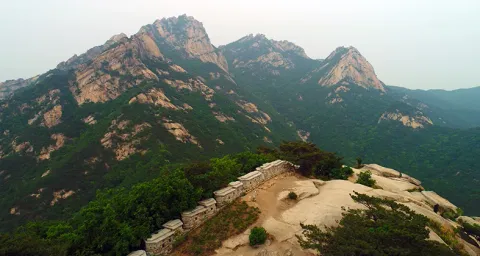
    After it was built during Baekje King Gaeru’s rule in 132, it was a ferocious point of struggle for territory and resistance among the three kingdoms: Silla, Goguryeo, Baekje. The final construction of Bukhansanseong was completed during the rule of Sukjong of the Joseon Dynasty in 1711. 90% of Bukhansanseong is in the Goyang jurisdiction.
  • Heungguksa Temple
    Heungguksa Temple VIEW
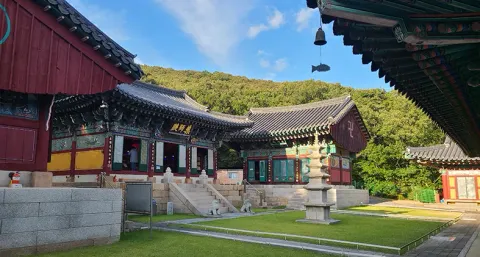
    Established in 661 CE by Great Master Monk Wonhyo in Silla Dynasty, the temple houses many historic cultural artifacts, including a wooden statue of the Amitabha Buddha and a drawing of Buddhist paradise.
  • Sangunsa Temple
    Sangunsa Temple VIEW
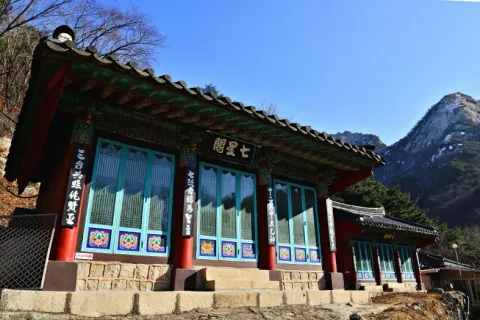
    Located inside Bukhansan-seong, 370, Bukhan-dong, Deokyang-gu, Goyang-si, Gyeonggi-do, Sangwun-sa is a temple directly managed by the Jogye Order of Korean Buddhism.With the name meaning ‘a temple within auspicious clouds,’ Sangwun-sa is one of the most well-known temples in Bukhan-san and surrounded by beautiful mountain peaks such as Wonhyo-bong, Yeongchi-bong, Baekun-dae, Mangyeong-dae, and Nojeok-bong. Legend has it that Sangwunsa was built by Monk Wonhyo during the Silla Period when he was returning after giving up on studying in Tang Dynasty and temporarily training in  Bukhan-san. However, there is no record left to support this and, therefore, this story is considered only a legend at the moment.  The actual foundation of Sangwun-sa dates back to 1722 (Year 2 of King Gyeongjong) by Master Monk Hoesu. According to Bukhan-ji, geographical records compiled by Monk Seongneung in 1745, there were 13 temples in Bukhansan-seong – Jungheung-sa, Taego-sa, Yongam-sa, Boguk-sa, Bogwang-sa, Buwang-sa, Wongak-sa, Guknyeong-sa, Sangun-sa, Seoam-sa, Jinguk-sa, Bongseong-am, and Wonhyo-am – and, with the exception of Jungheung-sa and Taego-sa, all the other temples were allegedly built for defense and management of the fortress.After the foundation, Sangwun-sa continued its existence as a base of the Buddhist army. Despite its current modest size, the temple used to include over 130 rooms, which were mostly destroyed along with many other temples during the Japanese colonial era and Korean War. However, having survived the history and keeping its place to date, Sangwun-sa is also famous for an ancient Chinese juniper there that allegedly helps people who have fertility issues, and also for the auspicious herbalist Buddha. The beautiful landscape surrounding it makes the temple popular not only among Buddhists but many hikers as well. 
  • Bongseongam Hermitage
    Bongseongam Hermitage VIEW
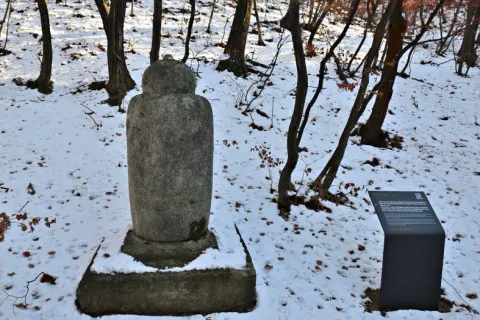
    A temple located in Bukhan-san within the confine of Goyang City, Bongseong-am is a branch temple that belongs to Jogye-sa, the main temple of Jogye Order of Korean Buddhism. It was founded in 1713 (Year 39 of King Sukjong) by the head monk Seongneung. It was one of twelve temples built during the construction of Bukhansan-seong ( Fortress) under the reign of King Sukjong in order to house the Buddhist Army that were to guard the fortress. With initially twenty-five rooms, it was repaired in 1860 (Year 11 of King Cheoljong) until which point, according to the construction log recorded by Bodam, the temple accommodated a sizable number of Buddhist monks and was visited by many believers. No record of subsequent repairs or changes made to the temple exist at the moment, and currently remaining buildings include Daewung-jeon, Sansin-gak, and Yosa-chae. It also houses a tower containing the remains of the founding monk Seongneung who also served as the head monk of Bukhansan-seong. 
  • Goyang Hyanggyo
    Goyang Hyanggyo VIEW
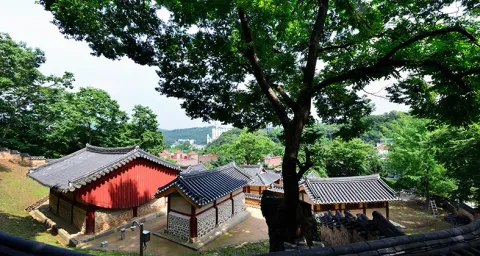
    As a local school built in the seventh year(1398) of Joseon Dynasty founder King Taejo, the school taught children of ages now suited to junior high and high schools. The school now houses memorial tablets of Confucius and his Korean adherents, and is used for the annual festival of Confucius and as an education center for ceremonial tea-making.
  • Ilsan Bamgasi Thatched House
    Ilsan Bamgasi Thatched House VIEW
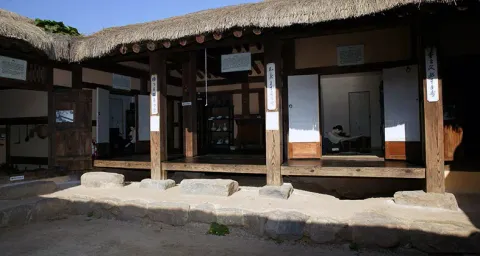
    Built around 170 years ago in the latter period of the Joseon Dynasty, the cottage offers a rare glimpse at a traditional house for ordinary citizens of the past. The name comes from the abundance of chestnut trees in the area at the time, and the cottage is best characterized by its unique round-shaped roof and an unfloored space in its yard.
  • Songgang Village
    Songgang Village VIEW
    An aristocrat, Songgang Jeongcheol, lived in this village where he helped the lyrical literature to flourish while writing the poems in Korean characters during the time when Chinese characters were in fashion. There is a poem monument of Songgang Jeongcheol at the village entrance, and traces of Songgang"s influence can be found in in the use of his name in Songgang Hill, Songgang Creek, Songgang Fishing Pond and the tomb of a gisaeng(a female entertainer) named. Gang-a, who loved Songgang, together with Songgang Literary Center.
Goyang Special CityGoyang MICEGoyang Cultural FoundationGoyang International Flower FestivalLafestaOne MountGoyang Industry Promotion AgencyKINTEXGoyang Urban Management CorporationHanwha Aqua Planet IlsanHyundai Department StoreHyundai Motorstudio Goyang

Goyang Tourism Council|President Lee Jong-ok| 2F, 1271-1 Jungang-ro, Ilsandong-gu, Goyang-si, Gyeonggi-do (Goyang Tourist Information Center)

TEL. 031-927-9973~4|FAX. 031-932-9975

Unauthorized collection of email addresses from this site is prohibited and punishable under the Information and Communications Network Act.

Copyright ⓒ Goyang Tourism Council, All Rights Reserved.